Menu
Cart 0

News

Soil Testing for Better Crop Performance

Posted by Admin on

Soil Testing for Better Crop Performance

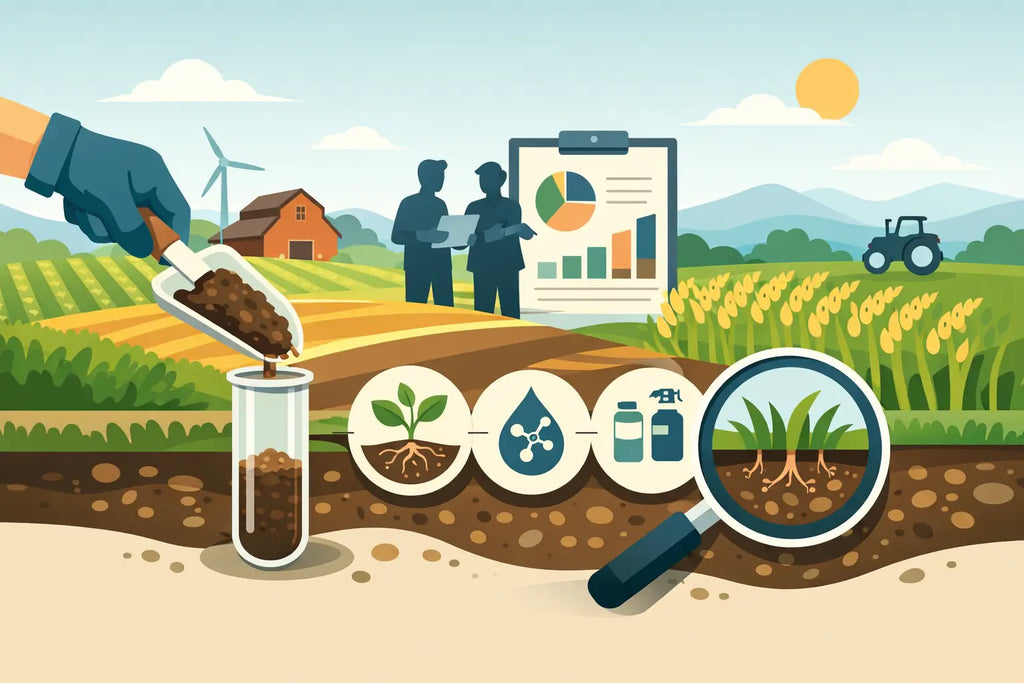
Soil testing shows what is limiting crop performance, so you can build a targeted nutrition and biology programme that protects margins and soil health.

Read more →

Regenerative Agriculture That Pays Its Way

Posted by Admin on

Regenerative Agriculture That Pays Its Way

Regenerative agriculture builds fertile soil, resilient crops and smarter input use. Learn how diagnostics guide profitable, practical change every season.

Read more →

Frost Control 2024

Posted by Daniel Schuurman on

Frost Control 2024

P. fluorescens strain, an INA- bacterium, has been found to have efficient activity at temperatures ranging from -8 to -15°C. This means that this strain of P. fluorescens can effectively prevent frost damage in crops even at these low temperatures.

Read more →

The Bounty of Bacillus - The Beauty of On-Farm Brewing by Graeme Sait

Posted by Daniel Schuurman on

The Bounty of Bacillus - The Beauty of On-Farm Brewing  by Graeme Sait

Plant growth-promoting bacteria (PGPB) are becoming integral tools in a more holistic farming model. Here, we are seeking to solve problems and stimulate growth with less chemical dependence. There are a variety of proven performers in this space, but the most productive are those from the spore-forming Bacillus family. Key players from this family can be multiplied on the farm to provide multiple benefits. In this article, we will explore the most researched and accomplished of this group, and I will provide some tips on how we can use them productively.

The best-performing Bacillus problem solvers include Bacillus subtilis, Bacillus amyloliquefaciens, Bacillus licheniformis, Bacillus pumilus, and Bacillus megaterium.

Read more →

Mycorrhizal Fungi: The Colonizers, Mediators, and Protectors of the Ecosystem

Posted by Daniel Schuurman on

Mycorrhizal Fungi: The Colonizers, Mediators, and Protectors of the Ecosystem

The AM fungi contribute up to 90% of plant P to host plants in ecosystems with reduced soil P availability; their contributions of plant nitrogen (N) are less pronounced and often depend on soil type, water content, and pH [3,4]. On the other hand, ECM fungi can acquire and immobilize significant amounts of organically bound N and P in the hyphae, representing up to 80% of plant N and P.

Read more →